LaTeX templates and examples — Conference Paper
Recent
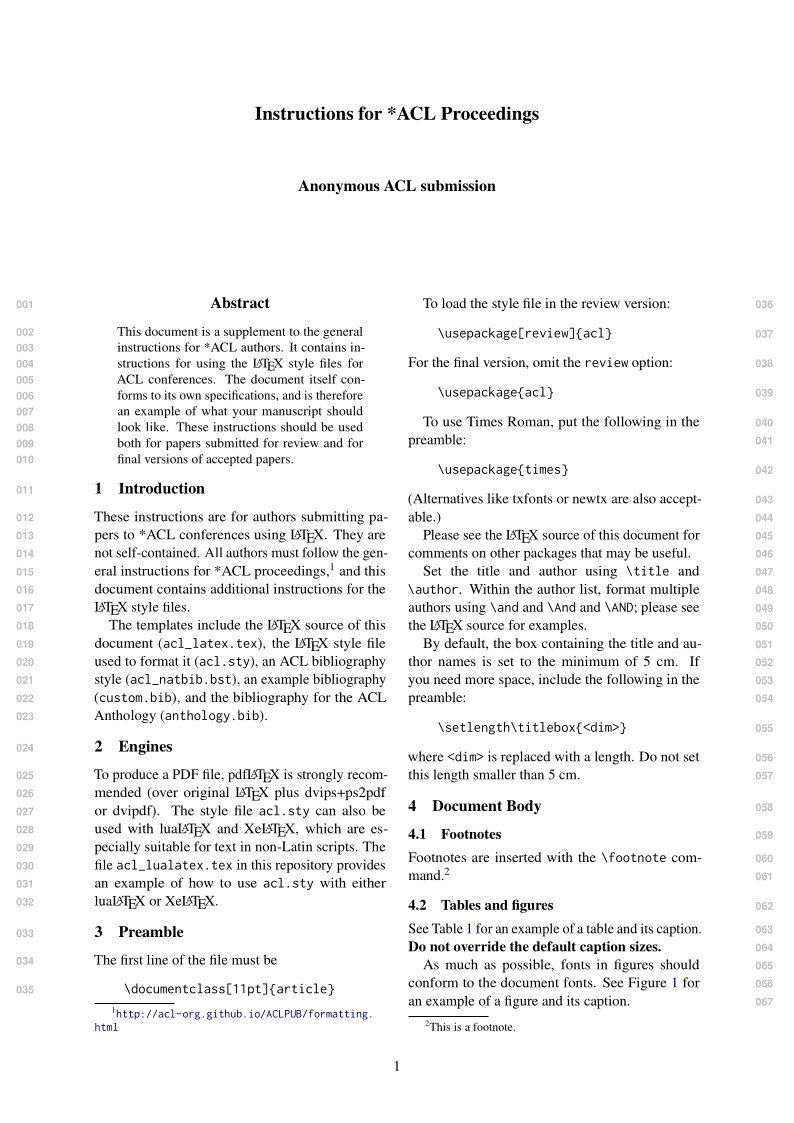
Association for Computational Linguistics style files
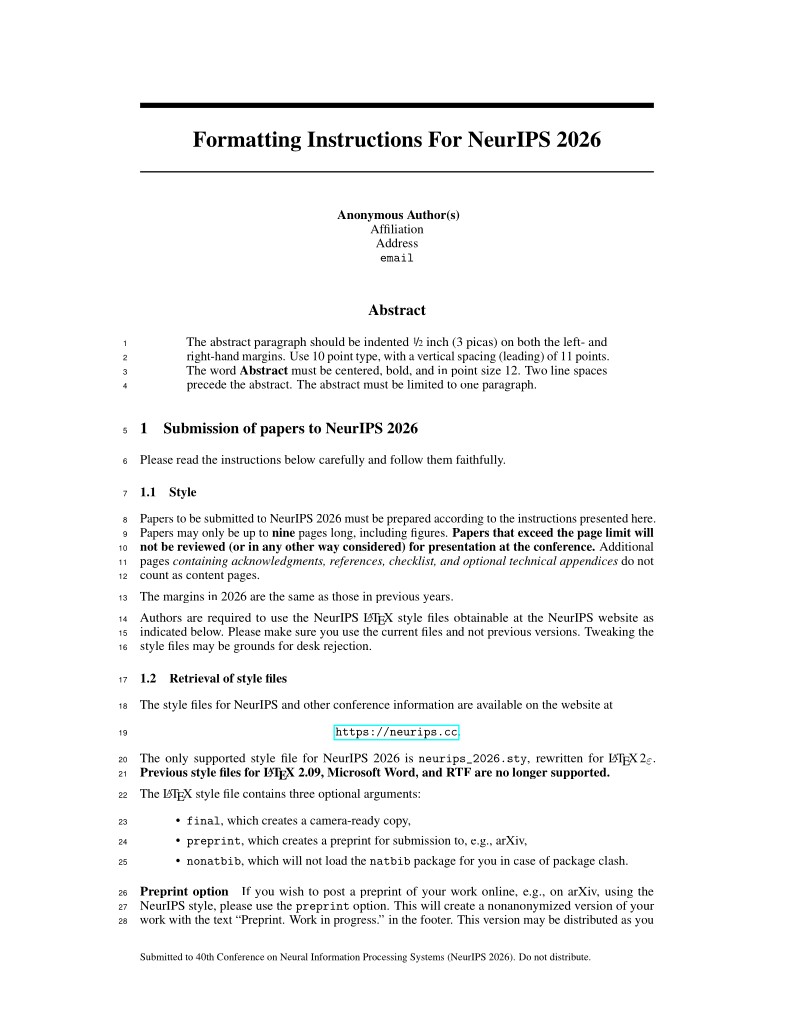
Formatting Instructions For NeurIPS 2026 official template Call for papers (with template and submission instructions): https://neurips.cc/Conferences/2026/CallForPapers
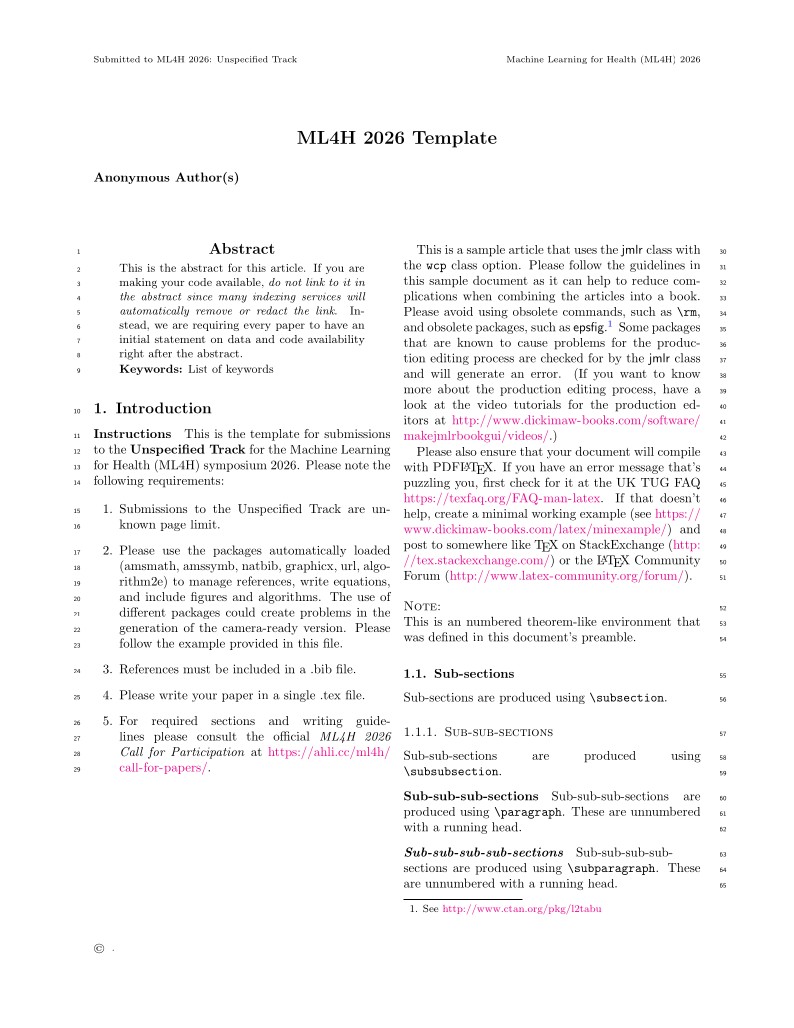
Machine Learning for Health (ML4H) Symposium 2026 Official Template. Website ML4H: https://ahli.cc/ml4h/
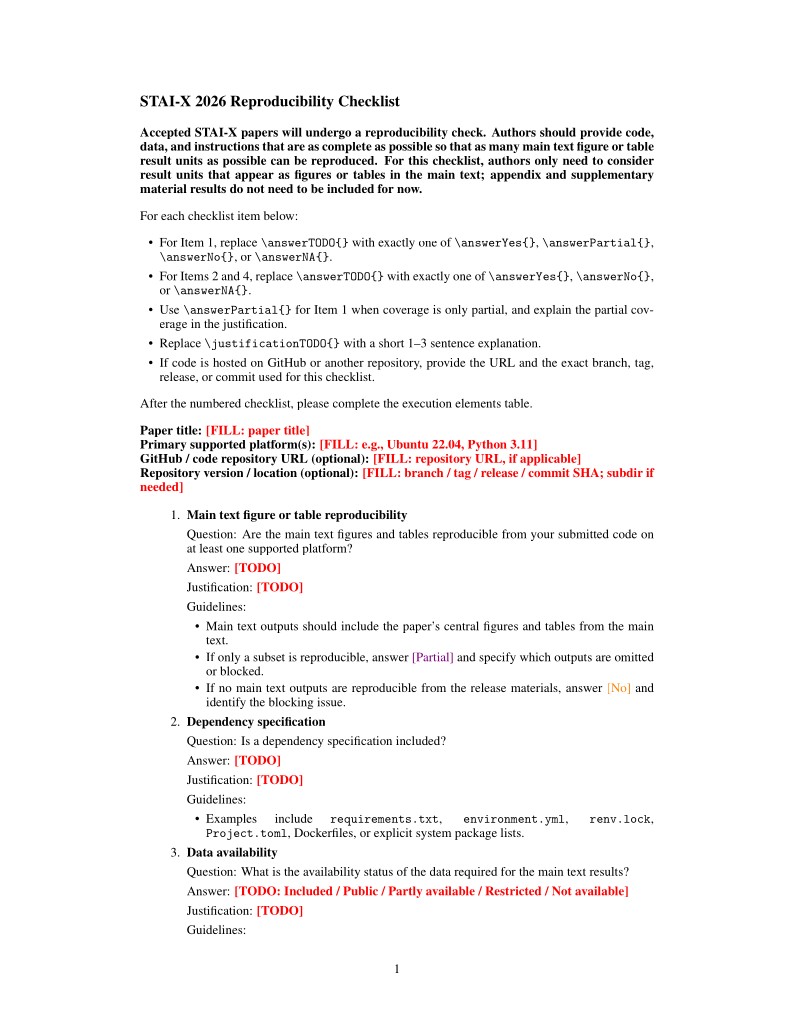
STAI-X 2026 Reproducibility Checklist (https://statsupai.org/STAIX2026/)
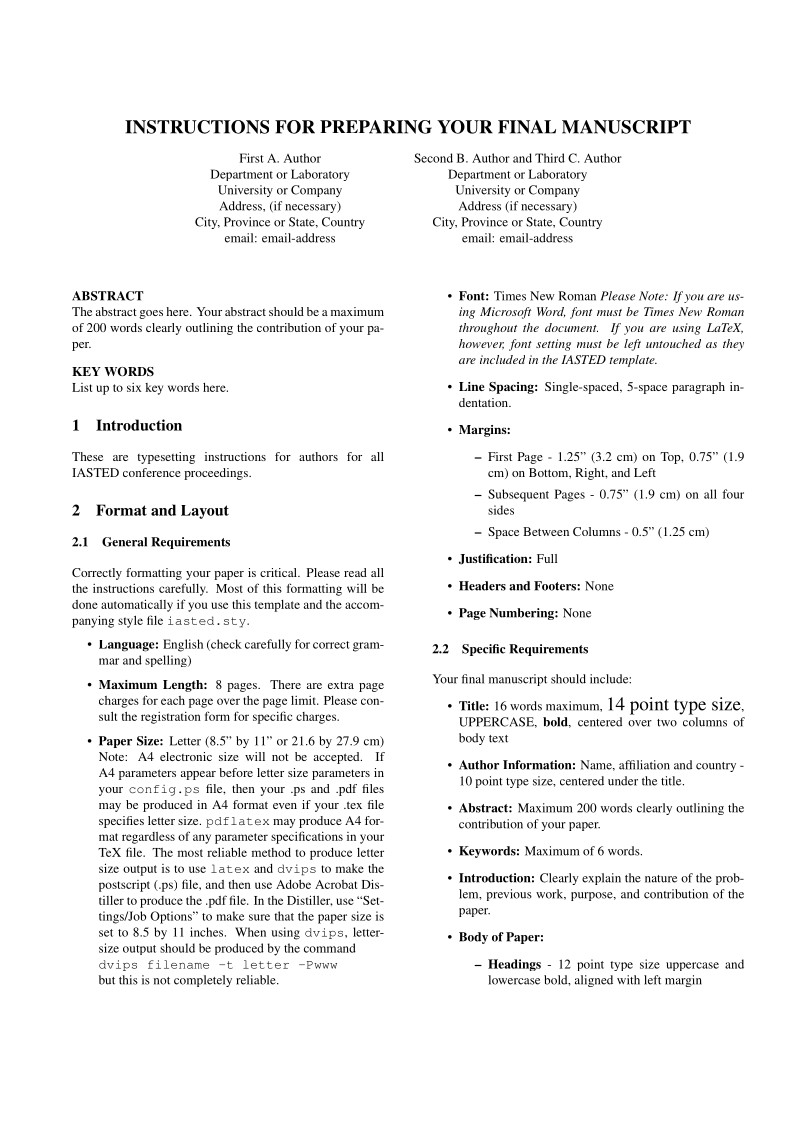
See: https://www.iasted.org/formatting-final-page.html
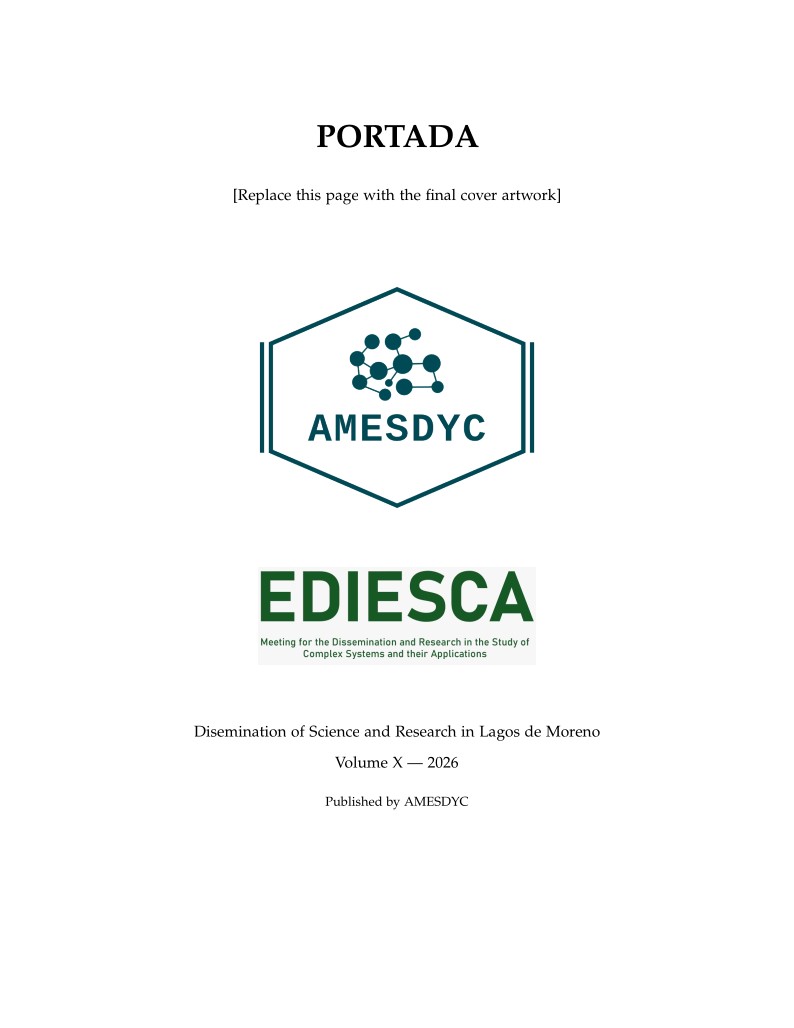
EDIESCA Conference Proceedings Template is the official LaTeX template developed for authors submitting papers to the Meeting for the Dissemination and Research in the Study of Complex Systems and their Applications (EDIESCA) organized by the Mexican Association of Dynamical Systems and Complexity (AMESDYC). The template provides a clean and easy-to-use environment for preparing conference manuscripts while preserving a consistent layout throughout the proceedings. Authors are only expected to edit the main.tex file, whereas the remaining project structure is maintained to ensure compatibility with the official publication format. The template includes predefined environments for title pages, author information, figures, tables, mathematical expressions, algorithms, references, and appendices, allowing authors to focus on the scientific content rather than formatting. This version was developed from previous EDIESCA proceedings and adapted from the work of J. M. Muñoz-Pacheco and J. R. Pulido-Luna, based on the original VEL template by vel@latextemplates.com. Additional information about AMESDYC and EDIESCA events can be found at: https://sistemasdinamicos.amesdyc.org https://sistemasdinamicos.amesdyc.org/p%C3%A1gina-principal/eventos_amesdyc
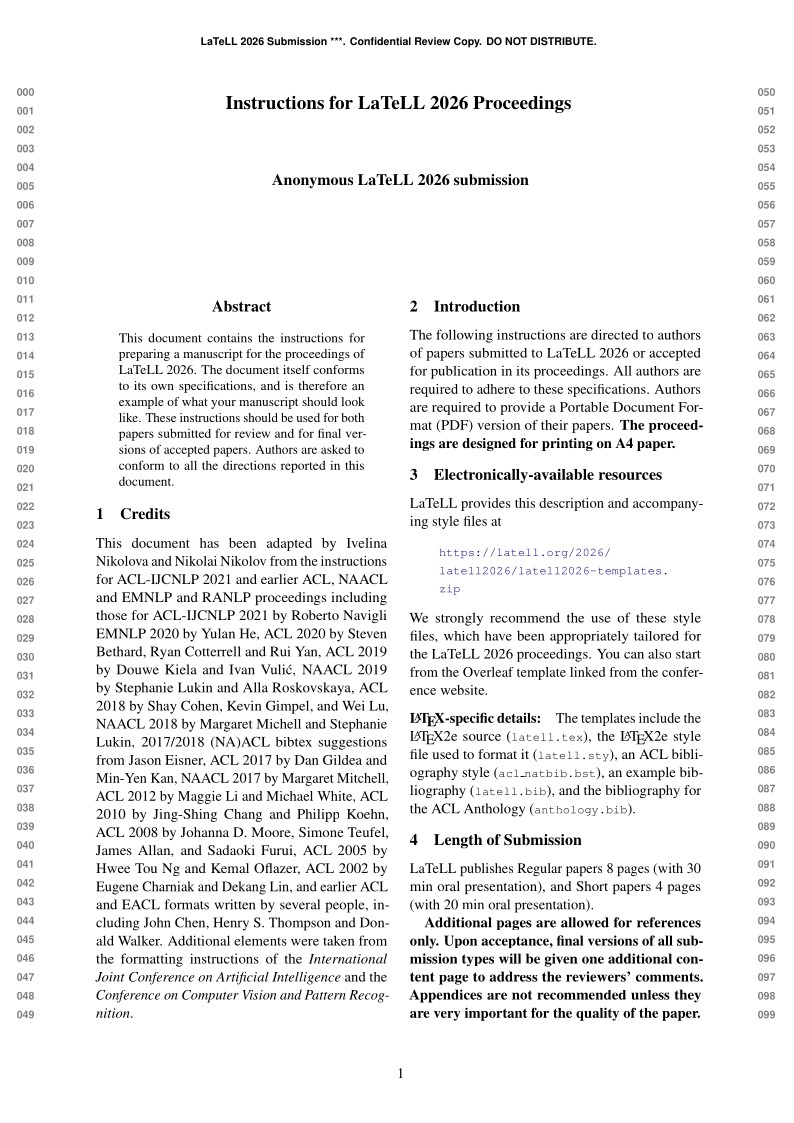
This is the official template of the LaTeLL 2026 conference following the official website: https://latell.org/2026/submissions-and-publication/
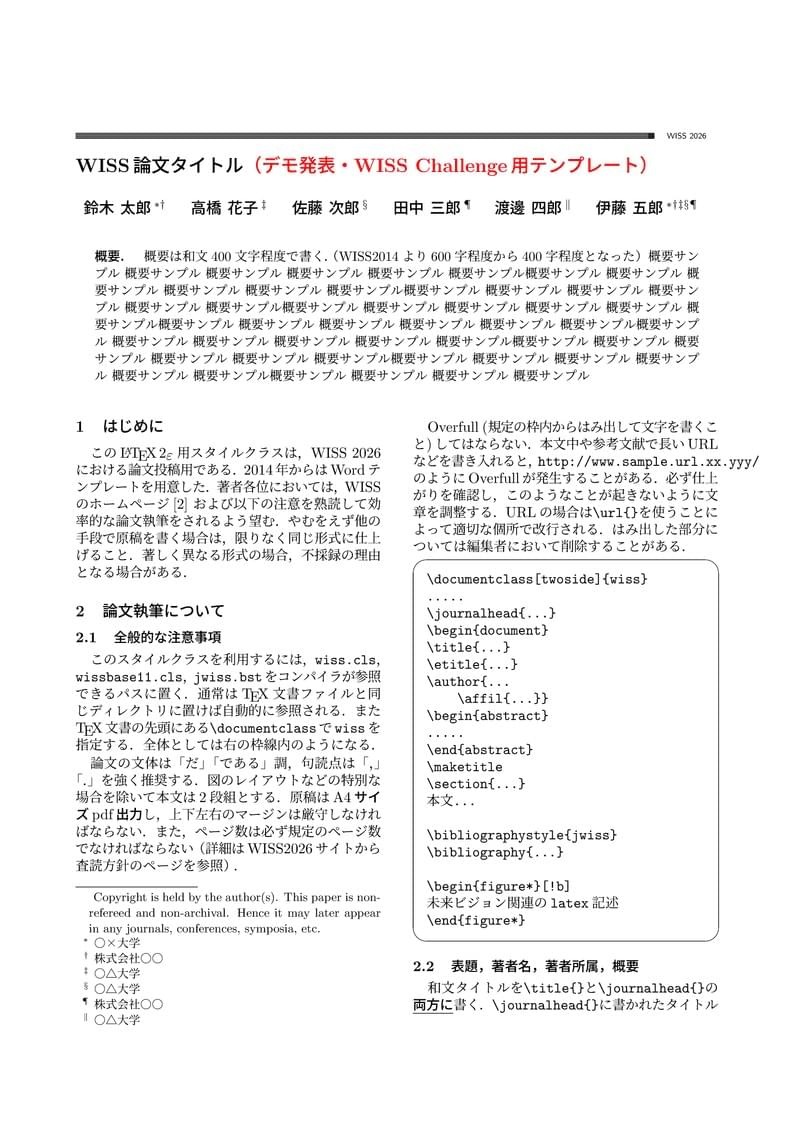
WISS2026のデモ発表・WISS Challenge用のテンプレートです。 This project is a template for demonstration and WISS Challenge papers at WISS2026. The official conference website for this year is currently under construction.
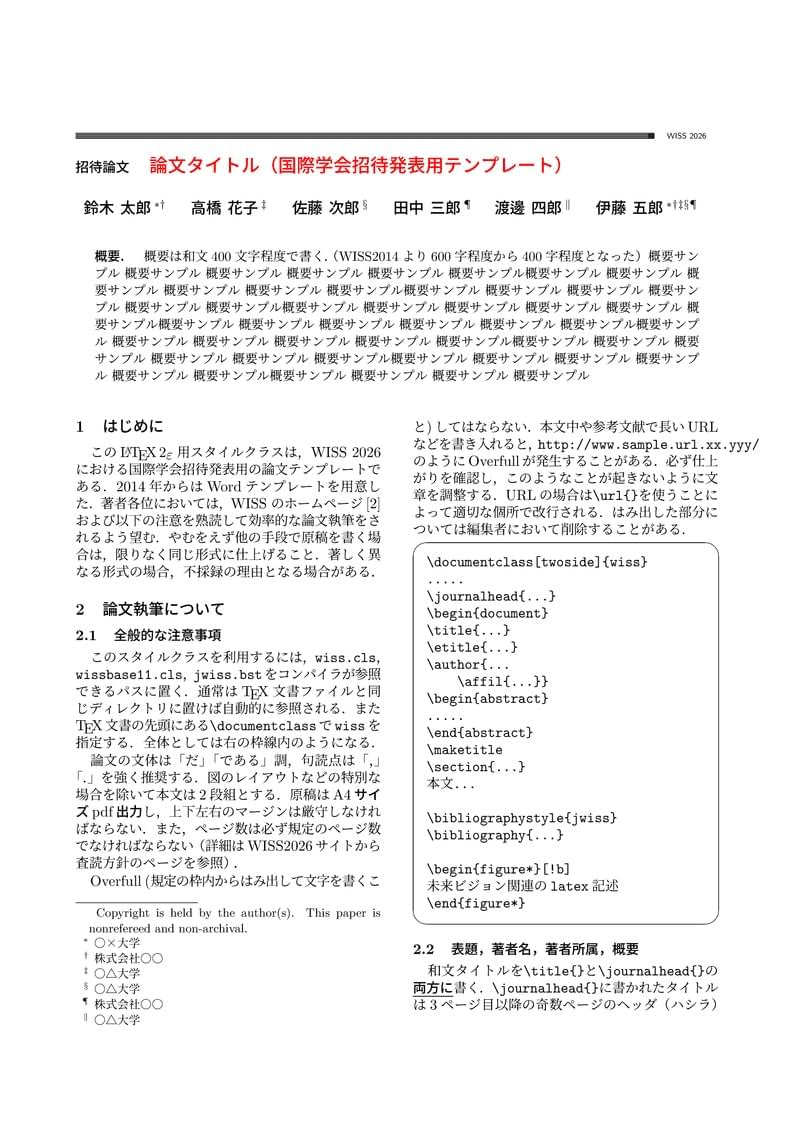
WISS2026の国際学会招待発表用のテンプレートです。 This project is a template for an invited presentation at an international conference at WISS2026. The official conference website for this year is currently under construction.
\begin
Discover why over 30 million people worldwide trust Overleaf with their work.