overleaf template galleryLaTeX templates and examples — Recent
Discover LaTeX templates and examples to help with everything from writing a journal article to using a specific LaTeX package.
Este artigo tem como objetivo relatar e detalhar a construção de um conversor buck-boost. Cuja a função deste é converter uma tensão cc (corrente contínua) de entrada, em outra tensão cc em sua saída, de valor mais elevado ou inferior dependendo de sua configuração. Destaca-se aqui o uso de um semi condutor MOSFET que funciona como uma chave controladora. Na elabiração deste está destacada o funcionamento, principais características e toda a parte de simulação e comprovação prática deste conversor.

An example on using gnuplot right in LaTeX with the gnuplottex package

This is a printed shogi board on an A3 paper. Both the source and the generated PDF file are distributed by CC0.

Template for submissions to the International Journal of Recirculating Aquaculture.

This template was originally created by Zhiya Zuo in May 2019, revised by Marina Zhang in July 2022, and approved by Erin Kaufman who provides provide technical assistance with thesis submission. The revised version adds committee member names, and reflects some changes in APA 7 style, especially the figure caption position. It's also hosted at GitHub https://github.com/qianjzhang/Uiowa-Thesis-Template

The objective is to study the effect of different experimental parameters on the reconstruction of the density of states (DoS) and to verify the viability of the 1D/2D simulation model developed at GeePs. Beside the calculation of the DoS through the modulated photo-current method (MPC), the ambipolar minority carrier diffusion length is measured through steady state photocarrier grating (SSPG) and the majority carrier lifetime / mobility product is measured through steady state photo-conductivity (SSPC). The measurements were observed to be in agreement with the theoretical simulations, but further experiments are needed to accurately conclude the need of a 2D simulation for the MPC experiment.

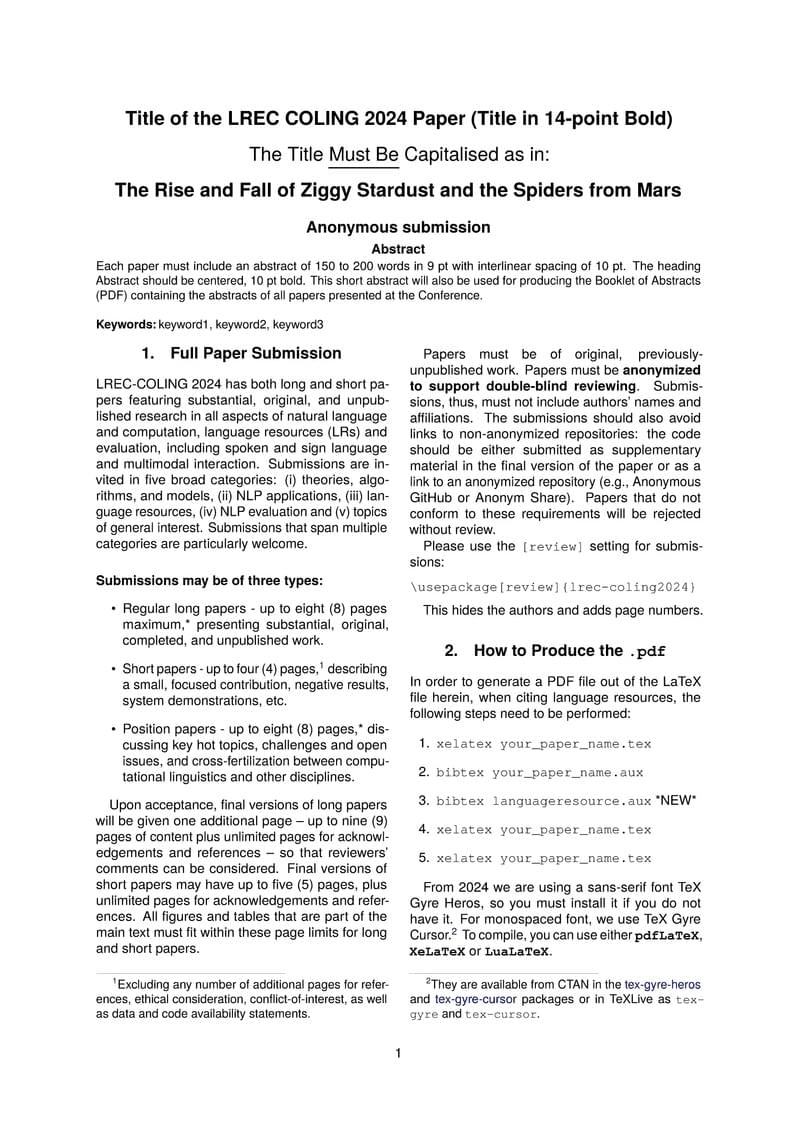
Template for IEEE Affective Computing and Intelligent Interaction (ACII) 2023

In nearly all videogames, creating smart and complex artificial agents helps ensure an enjoyable and challenging player experience. Using a dodgeball-inspired simulation, we attempt to train a population of robots to develop effective individual strategies against hard-coded opponents. Every evolving robot is controlled by a feedforward artificial neural network, and has a fitness function based on its hits and deaths. We evolved the robots using both standard and real-time NEAT against several teams. We hypothesized that interesting strategies would develop using both evolutionary algorithms, and fitness would increase in each trial. Initial experiments using rtNEAT did not increase fitness substantially, and after several thousand time steps the robots still exhibited mostly random movement. One exception was a defensive strategy against randomly moving enemies where individuals would specifically avoid the area near the center line. Subsequent experiments using the NEAT algorithm were more successful both visually and quantitatively: average fitness improved, and complex tactics appeared to develop in some trials, such as hiding behind the obstacle. Further research could improve our rtNEAT algorithm to match the relative effectiveness of NEAT, or use competitive coevolution to remove the need for hard-coded opponents.

浙江大学通用课程作业模板
\begin
Discover why over 25 million people worldwide trust Overleaf with their work.